
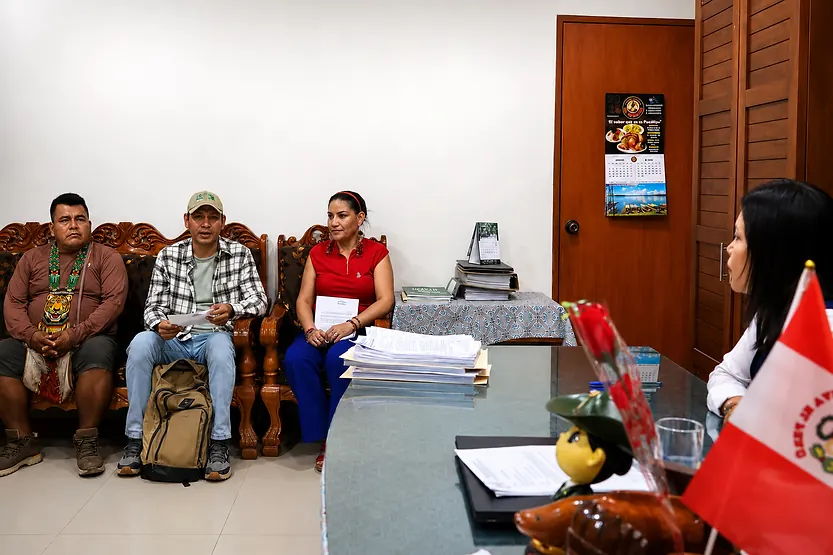
The Regional Forestry and Wildlife Management Office will carry out an assessment in the district of Yurúa following a request from the Association of Native Communities for the Integral Development of Yurúa (ACONADIYSH), an Indigenous organization that receives technical assistance from the Asociación Fronteras Amazónicas – AFRONTA to strengthen territorial governance and protect Amazonian forests.
The agreement was reached during a working meeting between the GRFFS, ACONADIYSH and AFRONTA, which also established joint training and technical assistance measures to strengthen the sustainable management of forestry and wildlife resources. The assessment will identify the main gaps in institutional coverage, the needs of the communities and the technical conditions required to justify setting up an office capable of providing closer and more timely services in one of the country's most remote districts.
Yurúa, on the border between Peru and Brazil, is home to communities of the Ashéninka, Amahuaca and Yaminahua peoples, and lies in a strategic area for the protection of Indigenous peoples in isolation and initial contact (PIACI). Its extensive forest cover is one of the best preserved ecosystems in the Peruvian Amazon, although it faces constant threats such as illegal logging, wildlife trafficking and other illicit activities.
Limited institutional presence makes it difficult to address these cases and forces communities to travel long distances to access public services. In many cases, filing a complaint in person with the Specialized Environmental Prosecutor's Office (FEMA) or completing paperwork with the forestry authority means several days of travel by river and air to Pucallpa, at a cost exceeding a monthly minimum wage.
"Indigenous organizations know the needs of their territories first hand, and our role is to provide technical assistance to strengthen their capacity to advocate before public institutions. This assessment is an important step towards bringing State services closer to Yurúa and improving the protection of Amazonian forests and of those who conserve them," said Carlos Torres, representative of AFRONTA.
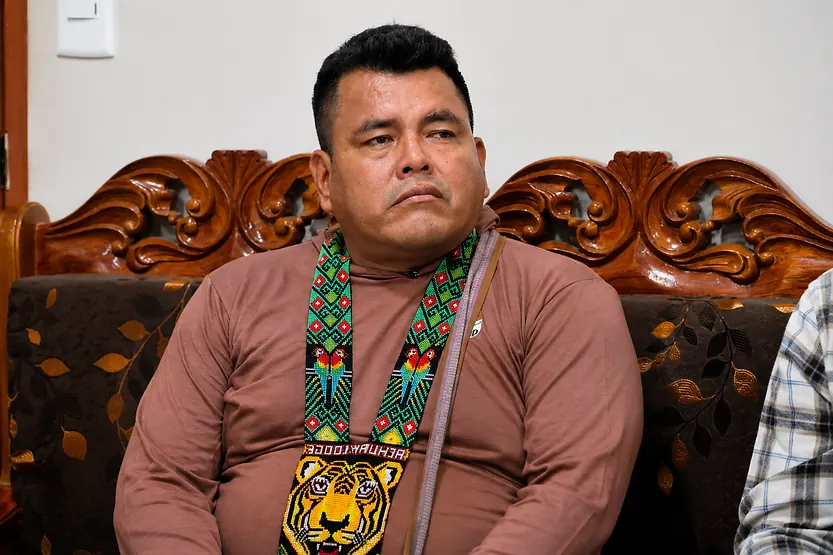
For his part, Fernando Aroni, president of ACONADIYSH, stressed the importance of the assessment translating into a greater State presence in the area. "Our communities face enormous difficulties in accessing public services. To file an environmental complaint or complete any paperwork we have to spend several days travelling and more than a minimum wage. Having a Forestry Management office in Yurúa will allow faster attention and will strengthen the protection of our territories and natural resources," he said.
With this support, AFRONTA reaffirms its commitment to strengthening the capacities of Amazonian Indigenous organizations and promoting closer coordination with public bodies, driving action that contributes to forest conservation, the protection of collective rights and forestry management that is closer to the communities that inhabit and protect these territories.