
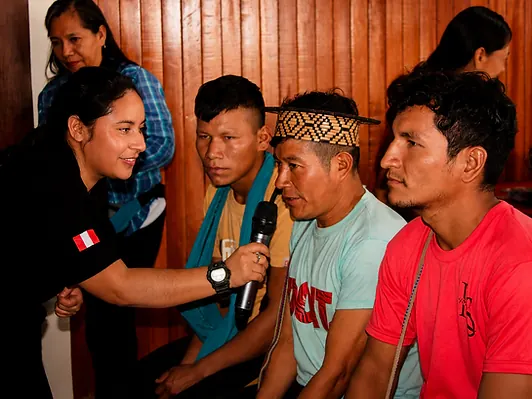
More than 30 representatives of Indigenous communities in the district of Yurúa, one of the most remote areas of the province of Atalaya in the Ucayali region, strengthened their capacities to monitor and protect their territories during a training session led by the Asociación Fronteras Amazónicas – AFRONTA and several partner institutions. The activity brought together members of the Community Forest Surveillance and Control Committees (CVC) from the native communities of Sawawo Hito 40, Koshireni, Santa Rosa, Nueva Victoria, El Dorado, San Pablo, Nueva Luz de Arara and Nueva Bella.
During the training, participants deepened their knowledge of the Forestry and Wildlife Act, the rights and responsibilities of communities regarding the management of their forests, and the role of the committees in surveillance, control and incident reporting. They also learned about coordination mechanisms with the competent bodies, such as the National Forestry and Wildlife Service (SERFOR), the Specialized Environmental Prosecutor's Office and the National Police of Peru, for responding to possible environmental crimes.
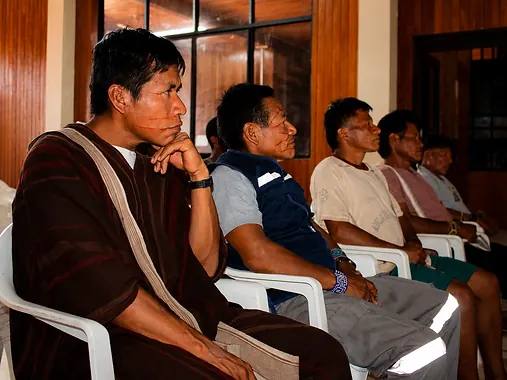
One of the topics that generated most interest was the use of technology for territorial monitoring. Specialists from the Alto Purús National Park ran practical sessions on operating drones, teaching participants to identify the parts of the equipment, perform basic flight manoeuvres and recognize their usefulness for recording information and strengthening surveillance in hard-to-reach areas. The management of conservation areas and the responsibilities of the institutions in charge of protecting them were also addressed.
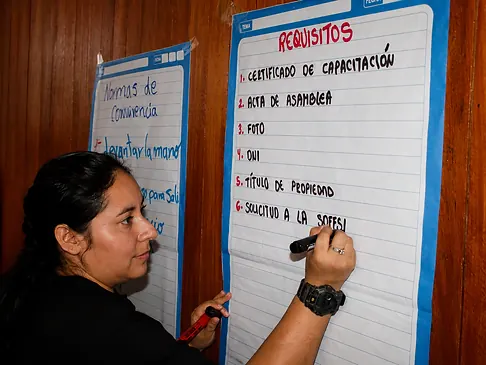
This activity is part of AFRONTA's work to strengthen territorial management and the conservation of Amazonian forests. The process has the technical support of the Peruvian Society for Environmental Law (SPDA) and funding from ReWild, strategic partners that contribute to strengthening Indigenous communities' capacities to protect their territories and natural resources.