
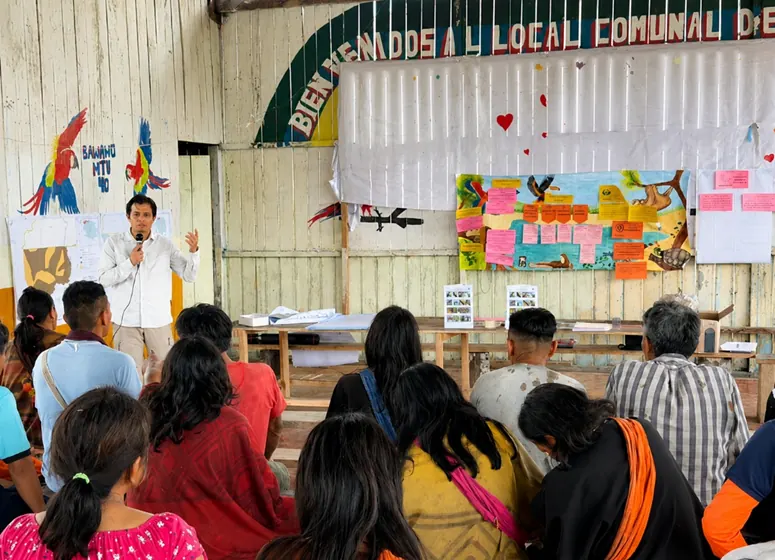
The Asociación Fronteras Amazónicas – AFRONTA held an information workshop in the native community of Sawawo Hito 40, in the district of Yurúa, province of Atalaya, to inform residents about progress in creating the Antamite Private Conservation Area (ACP) and to share the results of bird monitoring carried out on community land.
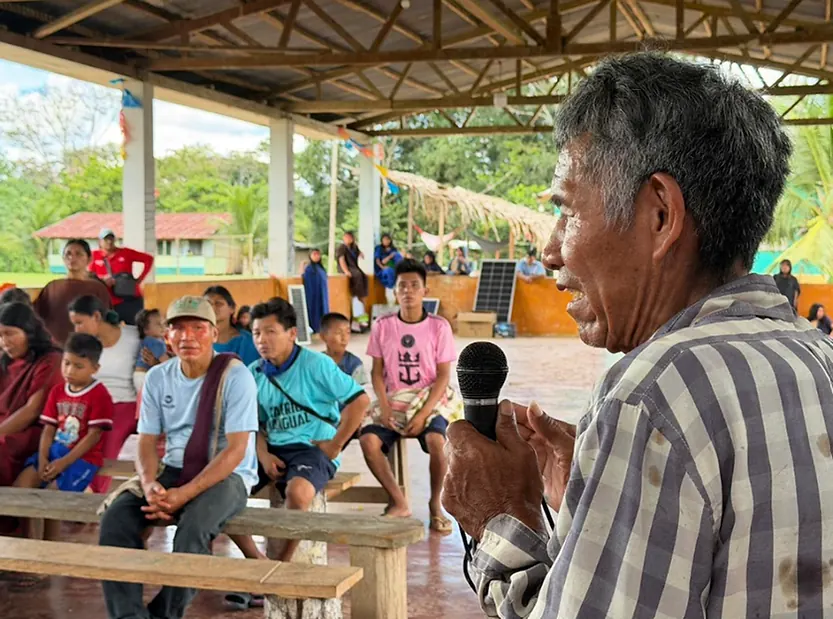
The activity brought together community members, community authorities, representatives of Peru's Fund for the Promotion of Protected Natural Areas (Profonanpe) and AFRONTA's technical and social team, in a space for dialogue and exchange on the importance of conserving Amazonian ecosystems and strengthening sustainable land management.
During the session, the technical team explained what a Private Conservation Area (ACP) is, its importance for protecting biodiversity and the progress made towards recognition of the Antamite ACP. The results of bird monitoring carried out during the high and low water seasons were also presented, along with progress on the area's technical file.
A territory that is key for conservation
The communal territory of Sawawo Hito 40 forms part of the tropical Amazonian forests of Yurúa, an area known for its high biological diversity and the presence of plant and animal species of conservation importance. In this context, bird monitoring made it possible to generate technical information on the bird species present in the territory and to strengthen the case for creating the Antamite ACP.
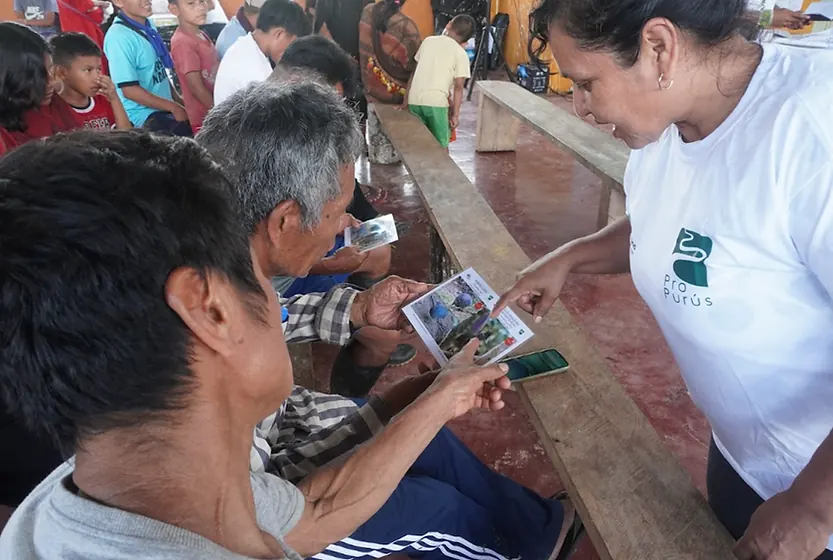
The methodology included field walks, species observation and the recording of biological information, complemented by the community's traditional knowledge. The workshop also encouraged accessible dialogue, with the support of a local teacher who translated the presentations into the Ashéninka language.
Protection backed by environmental law
Private Conservation Areas are recognized under Law No. 26834, the Protected Natural Areas Act, enacted in 1997, as tools that contribute to the conservation and sustainable management of ecosystems of high biological value in the country.
The Convention on Biological Diversity (CBD), signed by Peru in 1993, likewise reaffirms the importance of promoting action to protect habitats and species that are a priority for conservation.
Indigenous communities play a fundamental role in protecting these territories. In the case of Sawawo Hito 40, residents have reaffirmed their commitment to conserving their forests and natural resources through active participation in the process of creating the Antamite ACP.
Community participation and territorial strengthening
The session made it possible to answer participants' questions and to strengthen the working relationship between the community, AFRONTA and Profonanpe. Those attending highlighted the importance of maintaining spaces for dialogue and information that strengthen community participation in the conservation work under way in the area.
Community members expressed their interest in continuing to promote recognition of the Antamite ACP and stressed that conserving the territory is also an opportunity to strengthen the protection of their natural resources and to pass on to new generations the importance of caring for the forest and the bird species found in the area.
The process of creating the Antamite ACP is part of the work carried out under the Conserva Aves Project, an initiative aimed at promoting the conservation of priority ecosystems and strengthening the participation of local communities in the sustainable management of their territories.
Looking ahead, the aim is to keep strengthening community monitoring, the generation of biological information and environmental awareness work, encouraging communities themselves to take an active part in protecting and conserving their Amazonian forests.
Contact:
Darvin Aguilar, Communications Coordinator - aguilar@afronta.org.pe