
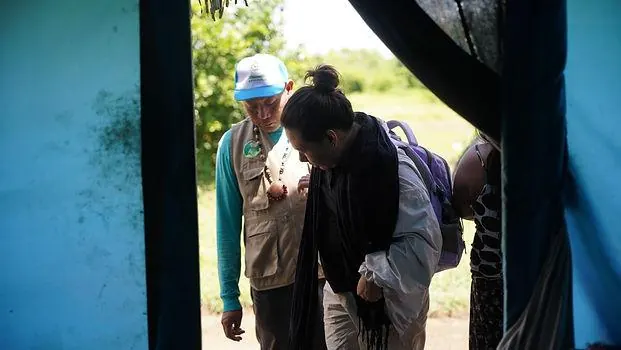
The native community of Bufeo, in the province of Purús, Ucayali region, is seeing significant improvements in the health and wellbeing of its residents thanks to access to safe drinking water. During a recent follow-up visit by the Asociación Fronteras Amazónicas – AFRONTA, residents reported that cases of diarrhoea and other gastrointestinal problems have fallen since a water filtration system was installed, which continues to benefit families in the community today.
Purús is one of the most isolated provinces in the country. The lack of road connections to the rest of Peru makes it difficult to access basic services, infrastructure and specialist care. In many Indigenous communities, drinking water comes directly from rivers or from collected rainwater, a situation that has historically exposed people to illnesses linked to contaminated water.
During this year's visit, residents of Bufeo explained that they used to rely mainly on rainwater or water taken directly from the river for cooking and for their families. Today the community filter provides safer water for drinking and preparing food, helping to reduce illnesses that were previously common in the community.
"Before, many families drank water straight from the river or waited for the rains to collect it. Today we can see that access to filtered water is producing positive changes in people's health, and it shows that sustainable solutions can have a lasting impact when communities take ownership of them," said Sally Plaza, representative of AFRONTA.
Residents also noted that the system keeps working thanks to the community's commitment to caring for and maintaining it. According to them, episodes of diarrhoea and stomach upsets have decreased, especially among children, improving families' living conditions and strengthening their wellbeing.
For AFRONTA, the experience in Bufeo shows the importance of driving initiatives that respond to the fundamental needs of Amazonian Indigenous peoples. The results reflect not only an improvement in community health, but also the value of alliances between organizations, communities and local actors in closing historical gaps in territories where access to basic services remains a constant challenge.